Steel Construction in Georgia
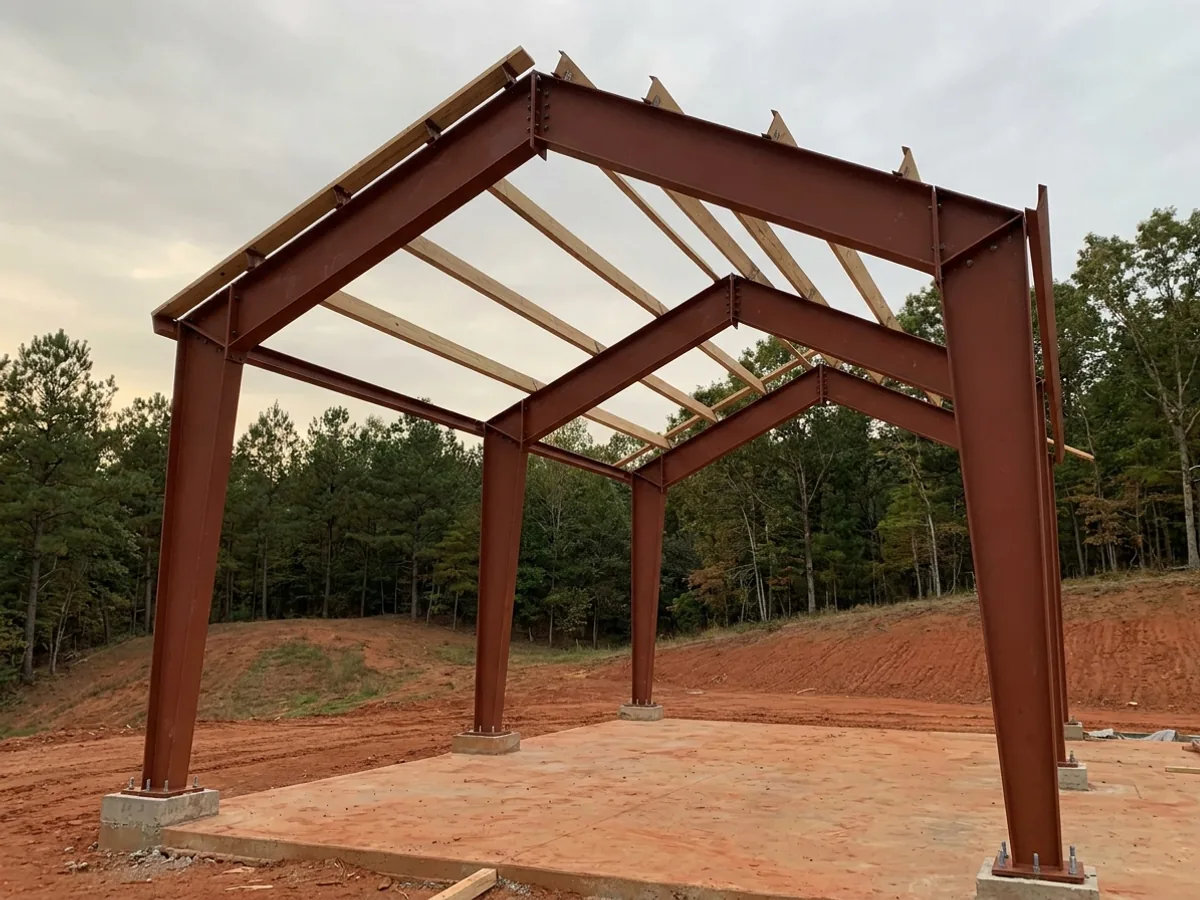
Steel does two things in Georgia that wood cannot. It does not feed termites, which matters in a state the residential code places in the very heavy termite infestation probability zone, and it holds a documented, engineered connection path from roof to foundation. Red-iron frames handle the big clear spans, light-gauge handles interior framing.
How a steel construction project runs
Four stages, in this order. The sequence matters more than it looks: getting engineering and permitting settled before anything is fabricated is what keeps a build from stalling.
Frame selection
Red-iron for long clear spans and heavy loads, light-gauge for interior framing and smaller footprints. We size the frame to the building rather than the other way around.
Connection engineering
The load path from roof panel to purlin to frame to anchor bolt to footing is engineered and documented. This is the part that carries an inspection.
Anchor bolts and slab
Anchor bolt placement is set before the pour, to tolerances measured in fractions of an inch. Getting this wrong is the single most expensive mistake on a steel build.
Erection and inspection
The frame is erected, plumbed, and torqued to spec, then inspected before the envelope closes it in.
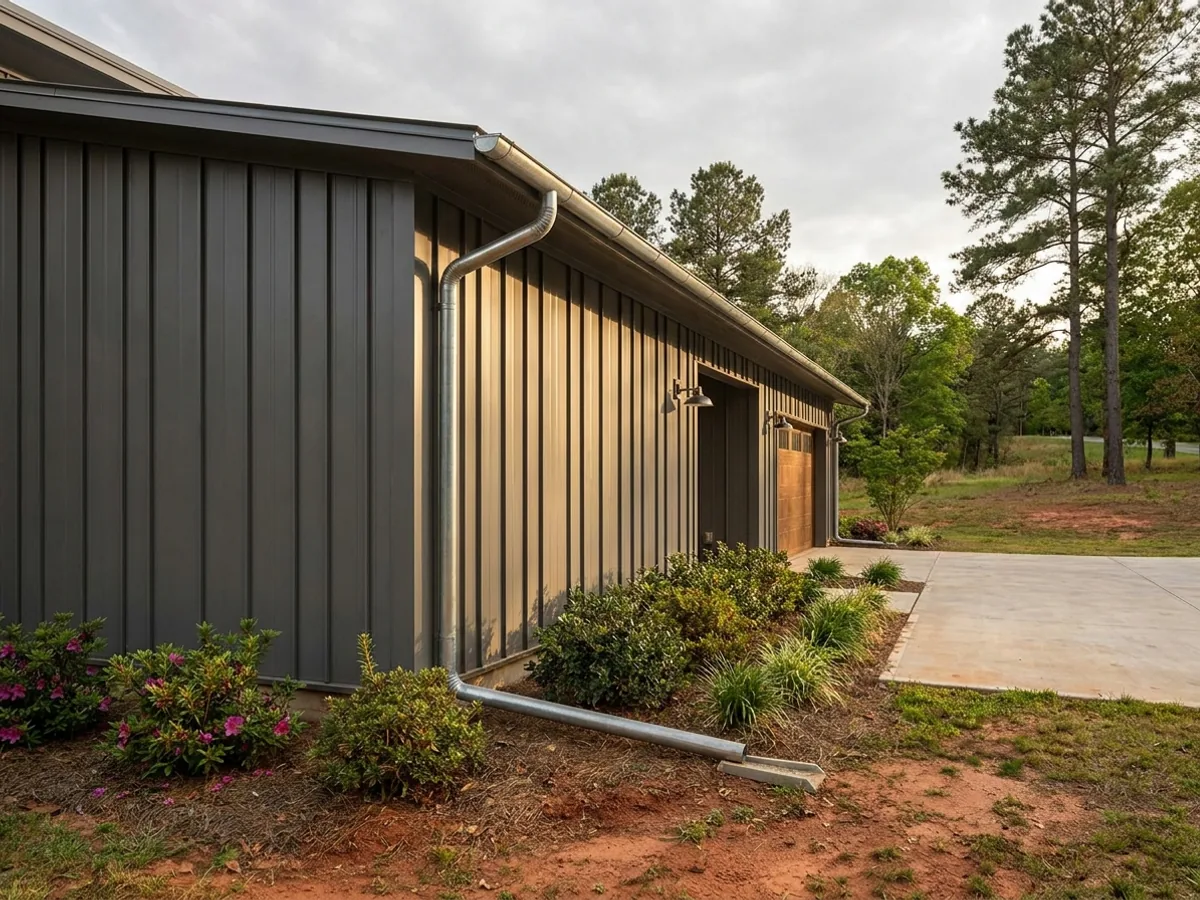
Georgia is a very heavy termite zone, and steel is not food
The residential code’s termite infestation probability map puts Georgia in the very heavy category, alongside the Gulf South and Florida. That is not an argument that timber cannot be built here, because it plainly can and mostly is. It is an argument that the structural frame is the one part of the building you cannot re-treat, replace or inspect easily once the walls are closed, and steel takes that whole category of risk off the table permanently.
Where we deliver steel construction
Across Georgia. Which county you build in decides your permitting authority, whether the building code is locally enforced at all, and the design criteria that authority has adopted — so two places twenty miles apart can carry very different engineering. Every location we cover has its own page setting out exactly that.
What actually decides the price
Square footage is the number everyone leads with, and it is rarely the one that moves a barndominium budget. These four do.
-
Frame weight
Steel is priced by the pound before it is priced by the building. Span, height, roof pitch and the design criteria your county adopted all decide how many pounds the frame needs.
-
Mill pricing at time of order
Steel is a commodity and it moves. A quote has a validity window for a real reason, and locking the order is what fixes the price rather than signing the contract.
-
Erection labour
Frame days need a crew and a machine. Access, ground conditions and how much of the building goes up in one lift all change what that costs.
-
Panel and coating spec
Gauge, finish and coating class carry a wide range. Within about a mile of salt water on the Georgia coast this stops being a preference and becomes a specification.
Steel Construction in Georgia: common questions
6 questions we get asked most often about building in Georgia. If yours is not on the list, ask it directly.
Does a steel building feel like a barn inside?
Is steel more expensive than wood?
What about rust?
Will lightning be a problem in a steel building?
Do I need a Georgia engineer for the steel package?
How does steel handle Georgia’s red clay?
Keep reading
The pages that answer the next question this one raises.
Ready to put steel construction against a real plan? Start there and the rest follows.
Tell us about the land
Send the parcel ID or an address and we will come back with what can be built on it, the wind load it has to meet, and a realistic budget range. That conversation costs nothing.