Turnkey Builds in Georgia
Turnkey means you sign once and get keys. We take the project from raw lot through permitting, site work, foundation, shell erection, mechanical rough-in, and interior finish. One contract, one schedule, one point of contact, and one party responsible when an inspector has a question.
How a turnkey builds project runs
Four stages, in this order. The sequence matters more than it looks: getting engineering and permitting settled before anything is fabricated is what keeps a build from stalling.
Feasibility and budget
Before anything is drawn we check zoning, setbacks, utility access, and flood zone on your parcel, then build a line-item budget. This is where most barndominium projects succeed or fail.
Design and permit
Plans are drawn, engineered, and submitted to your city or county building department. We manage the review comments and resubmittals so the permit clock keeps moving.
Site work and shell
Clearing, pad, and slab, then the frame goes up and the building is dried in. Dried-in is the milestone that protects everything that follows.
Finish and handover
Mechanical, electrical, plumbing, insulation, interior finish, and fixtures, then final inspection and certificate of occupancy. We walk the punch list with you before handover.
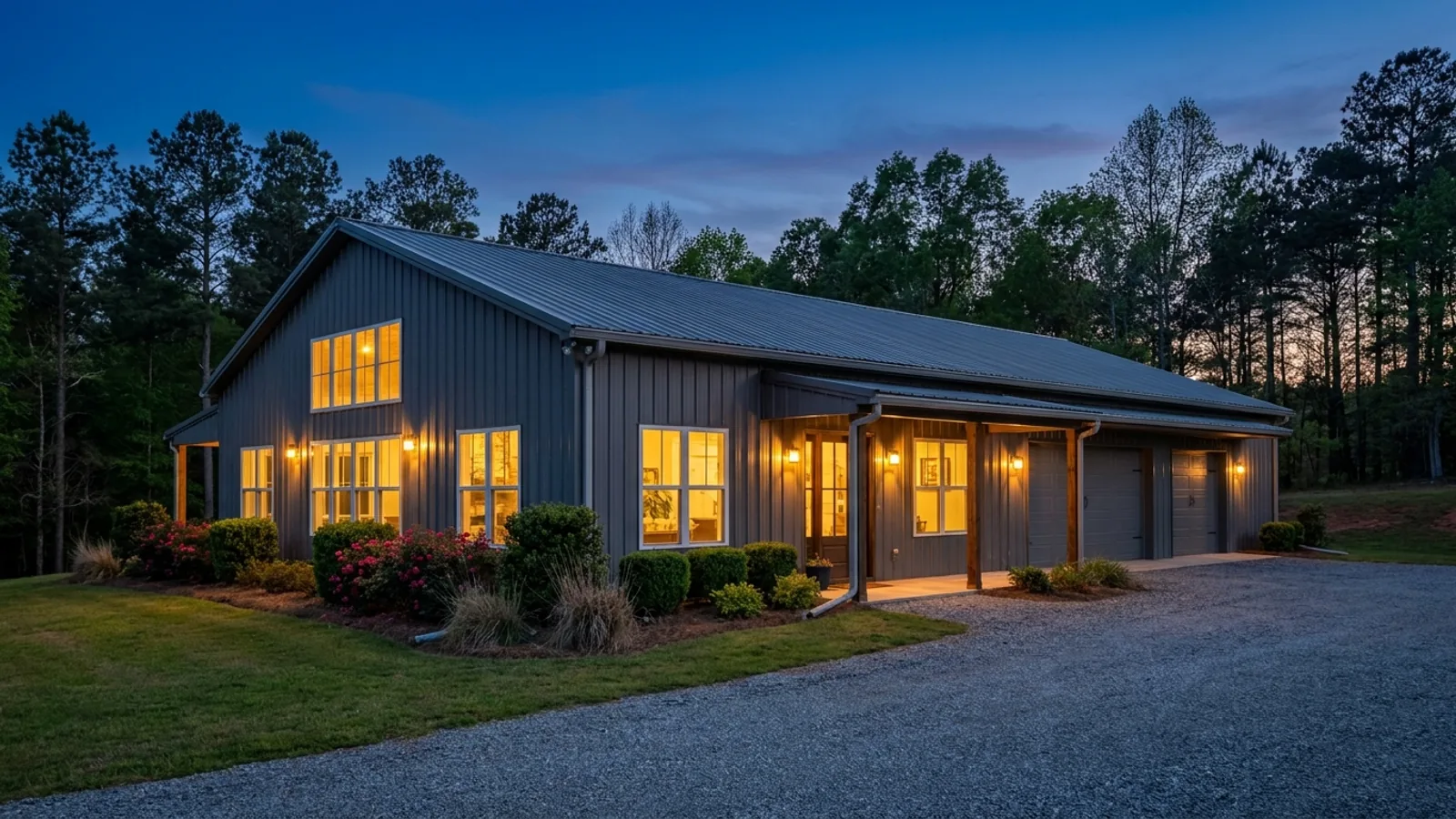
When something goes wrong, there is exactly one person to call
A barndominium built in pieces is a project where the kit supplier blames the slab, the slab contractor blames the drawings, and the drawings came from a company in another state that does not answer the phone. Turnkey means one contract, one schedule and one party accountable to the building official. On this building type, where the frame, the foundation and the engineering all have to agree with each other, that is worth more than it is on a conventional house.
Where we deliver turnkey builds
Across Georgia. Which county you build in decides your permitting authority, whether the building code is locally enforced at all, and the design criteria that authority has adopted — so two places twenty miles apart can carry very different engineering. Every location we cover has its own page setting out exactly that.
What actually decides the price
Square footage is the number everyone leads with, and it is rarely the one that moves a barndominium budget. These four do.
-
Finished versus unfinished square footage
Shop space and living space are not the same product. Two buildings of identical footprint can differ enormously depending on how much of the inside is finished to residential standard.
-
Site and slope
A flat, cleared, road-fronting parcel and a wooded sloping one produce very different numbers before anything is built. In North Georgia that slope may also be an opportunity, because it is what makes a walkout basement cheap.
-
Utilities and septic
Well, septic and power runs are the line items most likely to surprise a rural buyer. Distance to the nearest connection matters more than the size of the house.
-
Finish level
Cabinets, flooring, fixtures and trim carry an enormous range. This is the part of the budget you actually control, and the part where a number quoted before selections are made is not a real number.
Turnkey Builds in Georgia: common questions
6 questions we get asked most often about building in Georgia. If yours is not on the list, ask it directly.
What does turnkey actually include?
Do I need a licensed contractor in Georgia, or can I build it myself?
How long does a turnkey barndominium take?
What is the biggest thing that goes wrong on these projects?
Can I do some of the work myself to save money?
Do you build outside the counties listed on this site?
Keep reading
The pages that answer the next question this one raises.
How Long Does It Take?
Census data on build duration, and the Georgia statute setting the permit clock.
Read itHow to Finance a Barndominium
A single contract is also the structure lenders are most comfortable underwriting.
Read itBarndominium Cost Guide
Sourced ranges for the finished tier, so the quote has context.
Read itReady to put turnkey builds against a real plan? Start there and the rest follows.
Tell us about the land
Send the parcel ID or an address and we will come back with what can be built on it, the wind load it has to meet, and a realistic budget range. That conversation costs nothing.