Metal Homes in Georgia
A metal home wraps an engineered frame in a standing-seam or exposed-fastener metal envelope: a roof that shrugs off UV and driving rain, and a skin termites will not touch. Georgia spans energy code zones 2A, 3A and 4A, so the insulation and vapour strategy is set by your county rather than by a house style. Panel and fastener selection matters more near the coast.
How a metal homes project runs
Four stages, in this order. The sequence matters more than it looks: getting engineering and permitting settled before anything is fabricated is what keeps a build from stalling.
Envelope and panel choice
Standing-seam versus exposed-fastener, gauge, finish warranty, and fastener metallurgy. Within a few miles of salt water these choices decide how the building looks in fifteen years.
Insulation and vapor strategy
Metal and Georgia humidity make condensation a real design problem, and the answer differs between a coastal zone 2A parcel and a North Georgia zone 4A one. We specify the whole assembly deliberately rather than defaulting to batt.
Frame and dry-in
Frame erection followed by roof and wall panels, sealed at every penetration and transition.
Interior build-out
Interior framing, systems, and finish, with the thermal envelope verified before drywall closes it up.
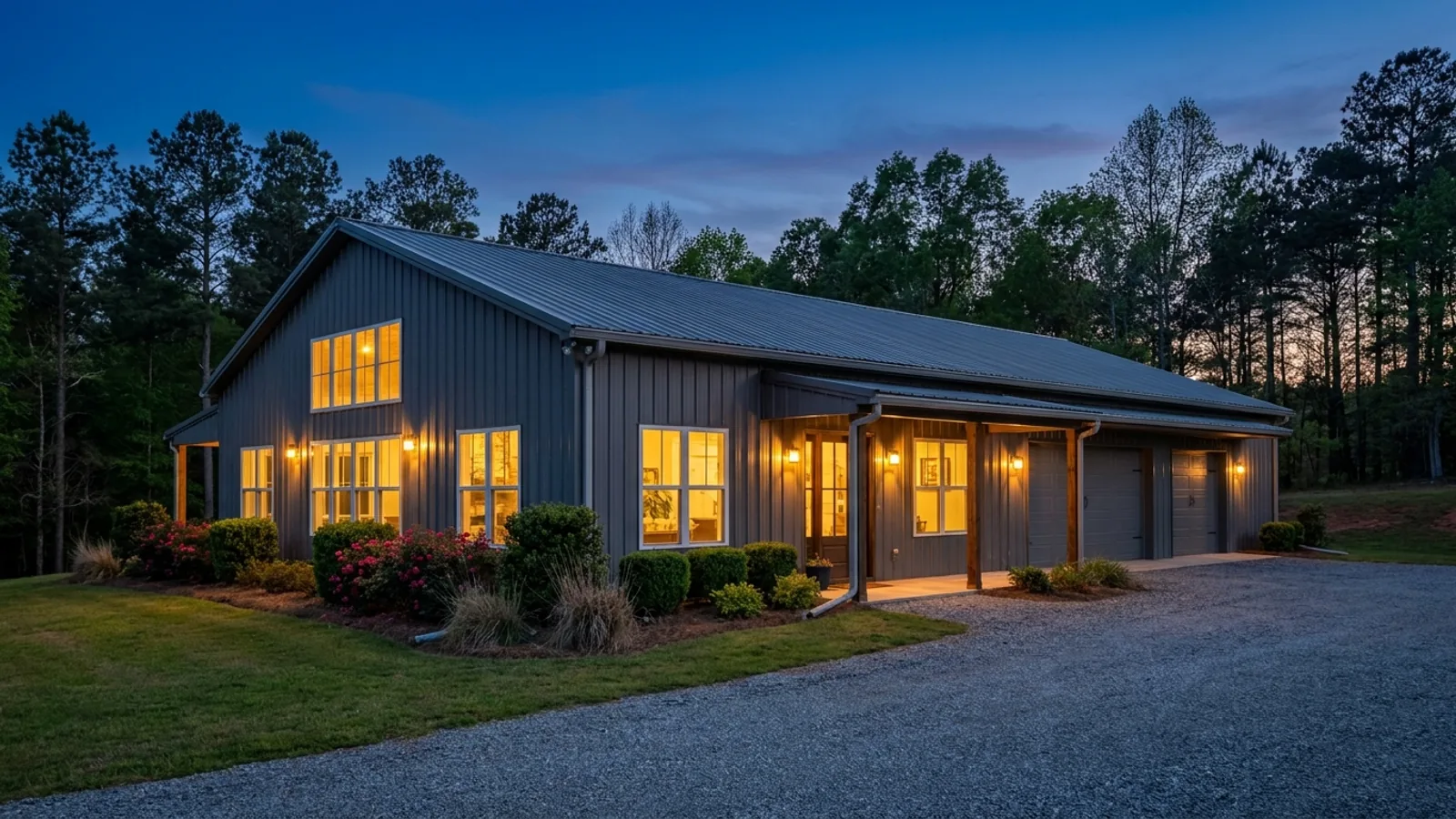
Georgia spans three climate zones, so there is no single right envelope
The energy code puts coastal and south Georgia in zone 2A, most of the middle of the state in 3A, and the North Georgia mountain counties in 4A. That is a genuine difference in what the envelope has to do, not a rounding error. A specification that is correct in Camden County is under-insulated in Rabun County, and one drawn for the mountains is money wasted on the coast.
Where we deliver metal homes
Across Georgia. Which county you build in decides your permitting authority, whether the building code is locally enforced at all, and the design criteria that authority has adopted — so two places twenty miles apart can carry very different engineering. Every location we cover has its own page setting out exactly that.
What actually decides the price
Square footage is the number everyone leads with, and it is rarely the one that moves a barndominium budget. These four do.
-
Climate zone
Zone 2A, 3A and 4A all occur in Georgia and each sets different envelope requirements. Your county decides which one you are designing to.
-
Vapour and air control
A metal skin in a humid climate will condense on the inside if the assembly is wrong. The control layers matter more than the R-value on the invoice.
-
Panel profile and finish
Standing seam, exposed fastener and the finish over them span a wide range in both cost and service life. Coastal parcels narrow the acceptable options considerably.
-
Mixed exterior materials
Board and batten, stone or timber accents change the look substantially and the budget noticeably. Most buildings people admire are not metal on every face.
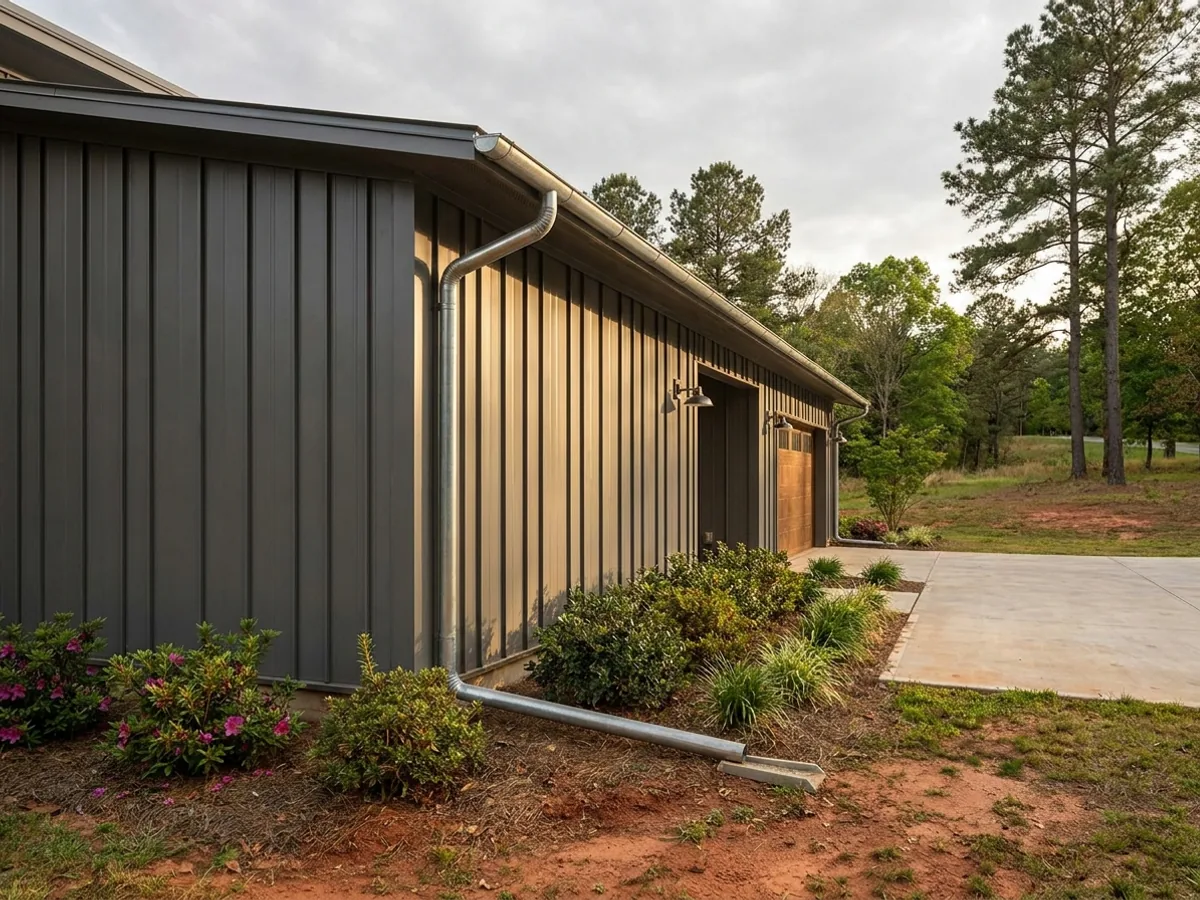
Metal Homes in Georgia: common questions
5 questions we get asked most often about building in Georgia. If yours is not on the list, ask it directly.
Is a metal home loud in the rain?
Will it be hot in a Georgia summer?
How long does the exterior last?
Can I insure a metal home in Georgia?
Does it look like a barn from the road?
Keep reading
The pages that answer the next question this one raises.
Ready to put metal homes against a real plan? Start there and the rest follows.
Tell us about the land
Send the parcel ID or an address and we will come back with what can be built on it, the wind load it has to meet, and a realistic budget range. That conversation costs nothing.