Barndominium Builders in Atlanta, GA
Atlanta is a full plan-review and inspection city, not a rural county, and the lot sizes show it: the ordinary single-family district, R-4, has a 9,000 square foot minimum, and only R-1 at two acres gives a building of this type real room. Almost every large parcel that trades in Fulton County is outside the city limits, so most Atlanta enquiries end up building 35 to 60 miles out in Paulding, Cherokee, Newton, Coweta, Forsyth or Carroll. We work both: what the city allows on an in-town lot, and which exurb county to be looking at if it does not.
Atlanta at a glance
- County
- Fulton County
- Population
- 534,278
- Cities and towns
- Atlanta, Roswell, Alpharetta, South Fulton, Fairburn, Union City, Palmetto, Chattahoochee Hills
Building conditions in Atlanta
What actually changes from one Georgia jurisdiction to the next: who issues the permit, what wind speed the structure has to be engineered to, and what the ground is like. These are the numbers your drawings have to satisfy.
City of Atlanta, Office of Buildings, atlantaga.gov, fetched 31 Aug 2026
City of Atlanta, Office of Buildings, "Implementation of Newly Adopted State Building Codes", atlantaga.gov, fetched 31 Aug 2026
City of Atlanta, Office of Buildings, "Structural Drawings" notice, atlantaga.gov, fetched 31 Aug 2026
Atlanta Code of Ordinances Part 16, sections 16-03.007, 16-04.007, 16-05.007 and 16-06.007, library.municode.com/ga/atlanta/codes/code_of_ordinances, fetched 31 Aug 2026
Atlanta Code of Ordinances section 16-28.004, library.municode.com/ga/atlanta/codes/code_of_ordinances, fetched 31 Aug 2026
City of Atlanta, "Statement on Tree Protection Ordinance Passage", atlantaga.gov, 16 June 2025, fetched 31 Aug 2026
Also worth knowing before you build in Atlanta
- Arborist meeting
- Any permit application that may affect trees must include documentation of a completed Arborist Meeting before it is submitted. Applications without it are not accepted, and the Arborist Division inspects again before the final certificate of occupancy.
- Design wind speed
- Confirmed per parcel. Georgia's Table R301.2 is filled in by the jurisdiction rather than the state, and inland metro Atlanta is commonly engineered to 115 mph ultimate design wind speed.
- No unincorporated Fulton County
- Since the City of South Fulton incorporated in 2017, Fulton County permits only the Fulton Industrial Business District overlay, through Public Works. Every other buildable parcel in the county sits inside a city.
- Land market
- Median asking price is $52,780 per acre in Fulton County against $50,000 in Paulding and $22,265 in Carroll. The Fulton acreage almost all sits outside Atlanta, in Chattahoochee Hills, South Fulton and the Roswell corridor.
- Permit fees
- Minimum permit cost is $150 plus a $25 technology fee, with the balance set by cost of construction under the city fee schedule. Express permits are counter-only and carry a 30-minute service level agreement.
- Private provider inspections
- From 1 July 2026 private provider inspection reports must reach the city within two business days of the inspection and carry the inspector's ICC certification, with engineers credentialed for the specific inspection type.
City of Atlanta Ordinance 25-O-1341, effective 25 June 2025; Office of Buildings and Arborist Division, atlantaga.gov, fetched 31 Aug 2026
2024 IRC with Georgia Amendments, Table R301.2 and R301.2.1; figure confirmed with the City of Atlanta Office of Buildings per project. Checked 31 Aug 2026
Fulton County Public Works, Planning, Zoning and Permitting, fultoncountyga.gov; Fulton County Code of Ordinances, Appendix B, Article XIIN, library.municode.com/ga/fulton_county/codes/code_of_ordinances. Fetched 31 Aug 2026
land.com (CoStar Group) county land market profiles, fetched 31 Aug 2026
City of Atlanta customer self-service, "Office of Buildings – Residential Permits (Construction)", atl311.com KB0012509; Office of Buildings, atlantaga.gov. Fetched 31 Aug 2026
Georgia SB 447 (Act 513), signed 11 May 2026; City of Atlanta Office of Buildings implementation notice, atlantaga.gov, fetched 31 Aug 2026
The expensive surprises are in the ground, not the building
Most of Fulton County rates poorly for dwellings in the soil survey, and the reason is water sitting close to the surface rather than weak ground. That makes the pad elevation and the drainage plan the two line items most likely to move your budget. We price the dirt before we price the building.
What we build in Atlanta
All nine services are available across Fulton County. The three below are where a project on a Fulton County parcel usually starts — the permit, the drawings, and the build itself. What a build costs depends far more on the parcel than on square footage, so we price against your land rather than publishing a rate card.
Permitting & Engineering
Sealed structural engineering and the permit that depends on it, from submittal through final inspection.
Custom Plans
Barndominium floor plans drawn to your land, your family, and the 2024 Georgia residential code.
Turnkey Builds
Start to finish barndominium construction: we handle permits, slab, shell, and full interior finish.
What a build looks like
Three stages every Atlanta project passes through, from a raw parcel to a finished home. Site work first, because that is where the budget is decided.
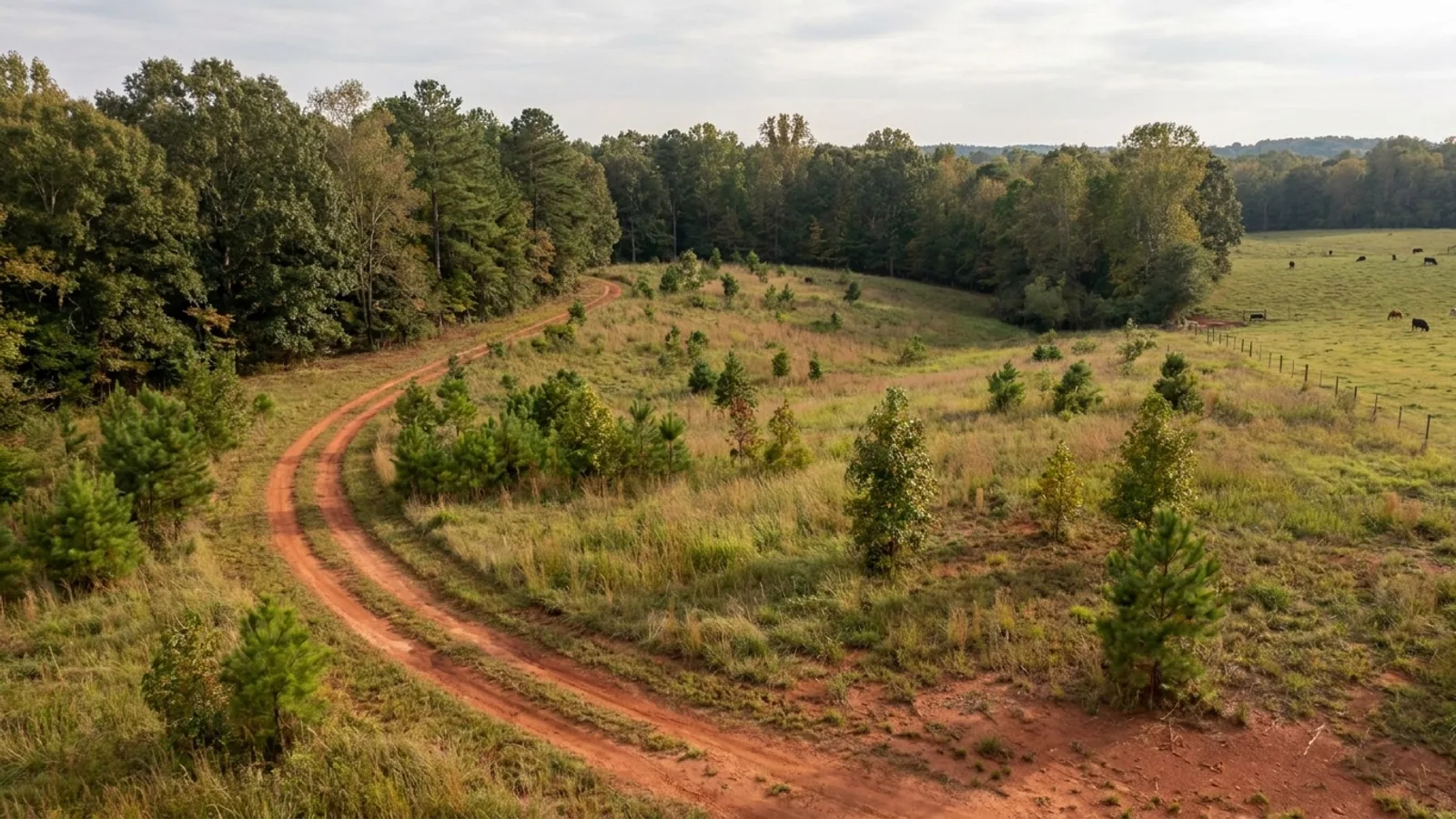
The parcel
Zoning, setbacks, flood zone and utility access get checked before anything is drawn.
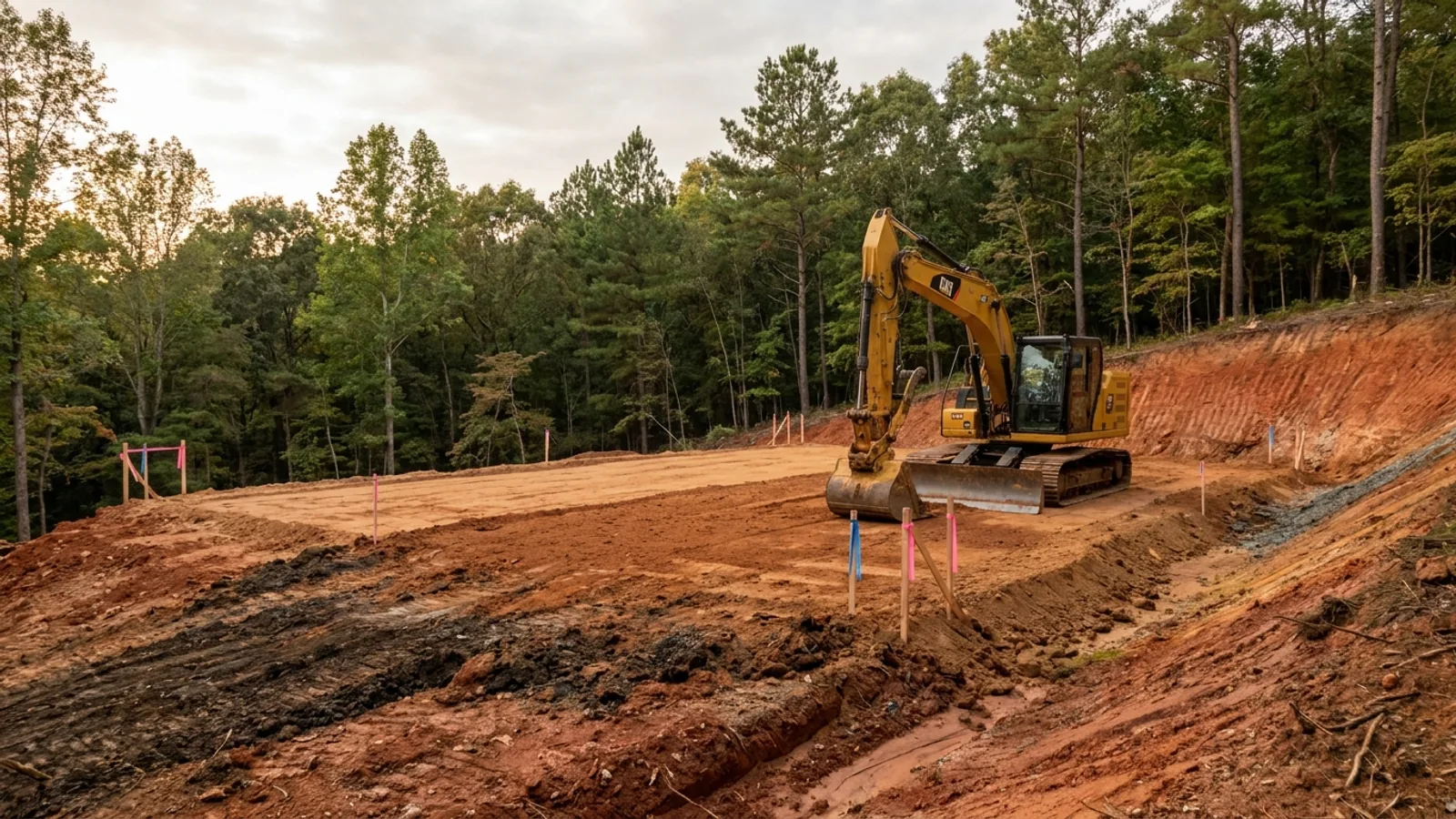
Pad and permit
Clearing, grading and a compacted pad, while the submittal works through Fulton County.
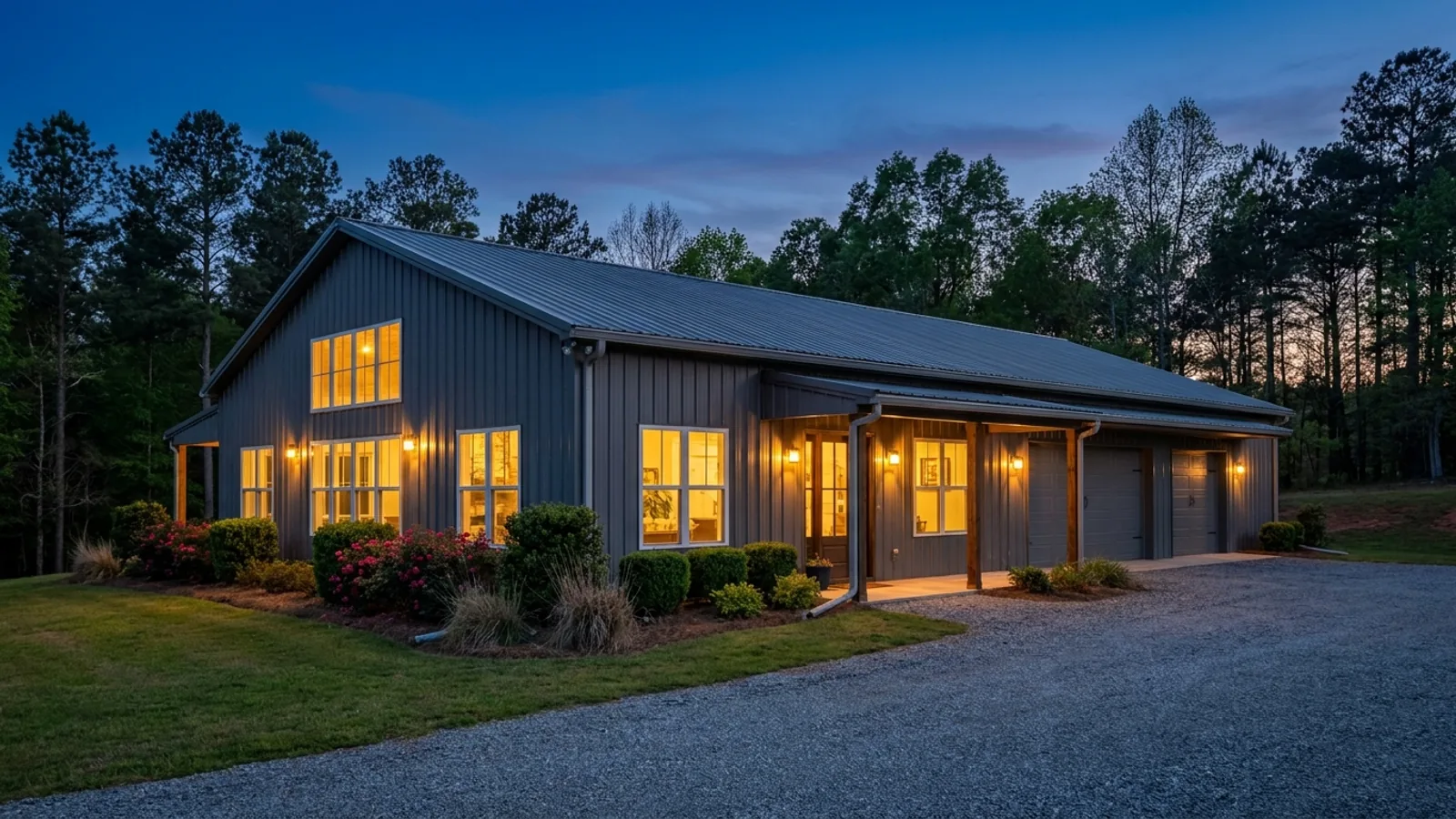
Frame to finish
Shell erected and dried in, then systems, insulation and interior finish through to CO.
Those are the rules for Fulton County. Tell us what you want to build and we will draw it to them.
Where we build around Atlanta
Fulton County and the rural land around it. The buildable acreage for a project this size usually sits outside the city limits, which is frequently what changes who issues your permit.
Keep reading
The questions that usually come next once you know what Atlanta allows.
Barndominium Cost Guide
Sourced per-square-foot ranges by tier and by size, with a calculator built on the same figures.
Read itIs It Legal in Georgia?
Classification, zoning, the HOA gate, and the agricultural exemption that does not cover a home.
Read itHow Long Does It Take?
Census build-duration data, and the Georgia statute setting the permit clock.
Read itSources for this page
The primary documents behind the Atlanta figures above. We would rather you checked them than took our word for it.
- City Code of OrdinancesZoning districts, minimum lot sizes, setbacks and height limits inside the city limits, as adopted.library.municode.com
- Fulton County Code of OrdinancesZoning districts, minimum lot sizes, setbacks and height limits, as adopted.library.municode.com
- O.C.G.A. § 8-2-25Why the state minimum codes apply even where a county does not enforce them, and the farm-building exemption that expressly excludes residential use.law.onecle.com
- O.C.G.A. § 8-2-26The five-business-day completeness notification, and the deemed-approved provision on the private professional provider route.codes.findlaw.com
- Georgia DCA: Mandatory and Permissive State CodesWhich nine codes apply statewide regardless of local adoption, and which require a local ordinance first.dca.georgia.gov
Nearby areas we build in
Others we cover in this part of Georgia. The permitting authority, the adopted design criteria and the zoning can all differ from one to the next.
Building in Atlanta: common questions
6 questions we get asked most often about building in Atlanta. If yours is not on the list, ask it directly.
Can I actually build a barndominium inside the Atlanta city limits?
Where near Atlanta can I realistically build one?
Atlanta has suspended structural plan review. Should that worry me?
How much will the tree ordinance cost me?
Can I put a large detached shop on my Atlanta lot and live above it?
Who governs my address, and is Fulton County a separate approval?
Building in Atlanta?
Start with the plan. Tell us what you want to build and we will draw it, then confirm what Fulton County will actually let you put on the parcel and what wind load it has to meet. That conversation costs nothing.